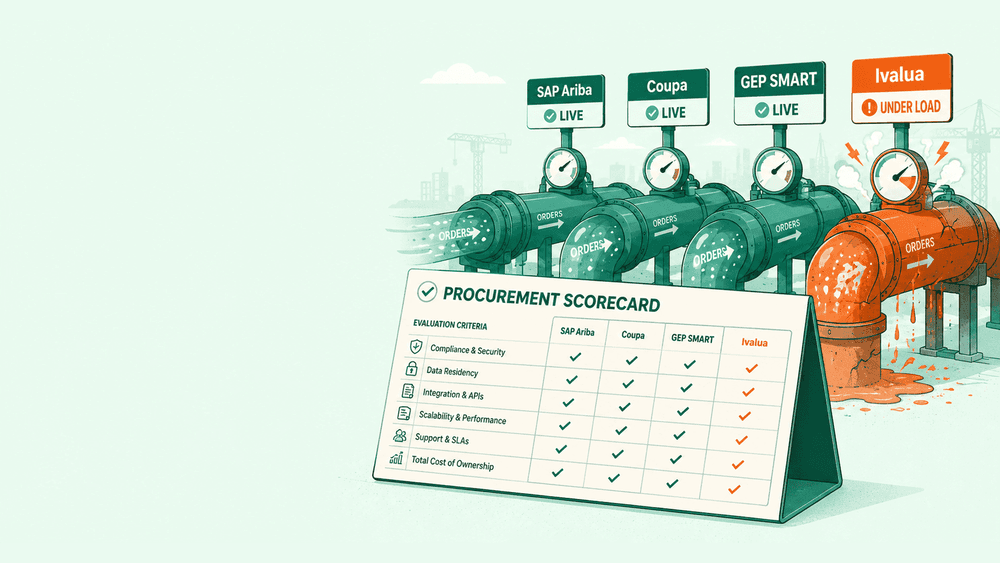


Sit through enough procurement evaluations and you'll watch the same scene: three shortlisted products, all describing themselves as a healthcare integration platform, all ticking the same boxes on the requirements sheet. One is a classic interface engine. One is a general-purpose automation tool with a healthcare adapter. One was actually built for this work. On paper they're indistinguishable, and the difference only surfaces after contract signature, which is the most expensive place to learn it.
So it's worth defining the category properly: what a healthcare integration platform actually does, what sits outside its job, and how to tell the real thing from the costume.
In brief
A healthcare integration platform (a healthcare iPaaS, if you like) is the layer that moves clinical and operational data between systems reliably: it handles the transports healthcare actually uses, speaks the standards natively (HL7 v2, FHIR, the terminologies underneath them), transforms data between the shapes different systems expect, orchestrates multi-step workflows, and makes the whole thing observable and governable. It is not an EPR, not a data warehouse, and not a connector catalogue. The dividing line in the market is whether the standards are first-class citizens of the product or plugins bolted onto something generic, and that difference is testable in about ten minutes.
Why the category is confusing on purpose
Category confusion benefits sellers. "Integration platform" is a phrase elastic enough to cover a message router from the 1990s, a workflow tool built for marketing automation, and a purpose-built clinical data layer, so everyone stretches it. Meanwhile the requirements sheets doing the evaluating are usually written at a level of abstraction ("supports HL7", "API-based", "low-code") that all three can honestly satisfy.
The result is that the buying decision quietly turns on the one thing the sheet never captures: what the product treats as its centre of gravity. For a healthcare-native platform, the standards are the centre. For everything else, they're an accommodation.
What a healthcare integration platform actually does
Strip away the branding and the job has six parts.
- Connectivity on healthcare's terms. The transports this sector actually runs on: MLLP for the HL7 v2 estate, SFTP for the file feeds that quietly carry half the data in any organisation, HTTP APIs for everything modern. If a product treats MLLP or scheduled file handling as exotic, it wasn't built here.
- Standards handled natively. Parsing and producing HL7 v2, reading and writing FHIR, converting between the two. Natively means the platform understands segments, resources and profiles as structures with rules, not as text to be regex'd.
- Terminology as infrastructure. Code systems, value sets and the mappings between them, available to workflows at runtime. Data can be structurally perfect and semantically wrong; terminology is how a platform tells the difference.
- Transformation. The unglamorous majority of integration work: reshaping what one system emits into what another accepts, ideally as reviewable configuration rather than buried code.
- Orchestration. Real flows are multi-step: receive, validate, enrich, branch, deliver, confirm. A platform lets you compose those steps visibly, so the flow is an artefact someone new can read.
- Operations and governance. Monitoring, alerting, exception handling, versioning, audit. In healthcare this isn't operational hygiene, it's the substance of every information governance conversation you'll ever have about the integration layer.
A product that genuinely covers all six is in the category. A product that covers two and gestures at the rest is something else wearing the name.
What it isn't
Boundaries matter as much as capabilities, because most integration platform disappointment comes from expecting the layer to be something adjacent to itself.
It isn't an EPR or a system of record: the platform moves and shapes data between systems that own it; the moment it becomes the place data lives, you've acquired a records system with none of a records system's safeguards. It isn't a data warehouse or analytics layer: feeding one, yes; being one, no. And it isn't a connector catalogue. Pre-built connectors are pleasant, but healthcare's reality is that every deployment of every major clinical system is configured differently, so the durable asset is a platform that handles the pattern (the feed, the standard, the transform), not a logo wall that handles the brochure.
The generic-tool trap
The most seductive wrong answer in this category is the general-purpose automation platform with a healthcare adapter. The demo is genuinely good: familiar interface, huge ecosystem, an HL7 connector right there in the marketplace. The gap appears in the second month, when it turns out the connector parses messages but nothing in the platform understands them: no notion of profiles or terminology bindings, no concept of what makes a merge message dangerous, no answer for the file-based, effective-dated, exception-heavy texture of real health data flows.
A healthcare skin on a generic engine gives you healthcare vocabulary at the edge and generic assumptions at the core. It's not that these tools are bad; it's that in this sector the assumptions are the product. For what it's worth, this is the conviction WeHub is organised around: one platform, four products, with Studio (the workflow builder) and Term (the terminology server) live today, and Records (a FHIR data store) and Proof (conformance testing) in development, each existing because some part of the six-part job above deserves to be first-class rather than a feature.
The ten-minute test
You don't need a procurement cycle to tell the categories apart; you need four questions in a live demo. Ask to see a real HL7 v2 message parsed, right now, and watch whether the product treats it as structure or as string. Ask where terminology lives and what validates a code at runtime. Ask what deployment options exist when a customer can't send data to a shared cloud. And ask, specifically, what happens when a message fails at 2am: where it goes, who's told, and what the trail looks like afterwards.
Confident, specific answers to all four almost always mean healthcare-native. A pause, a "roadmap", or a partner referral on any of them tells you which kind of product you're actually looking at, and it tells you before the contract does.
The bottom line
The category is real, the label isn't reliable, and the difference is testable. A healthcare integration platform is the layer that speaks this sector's standards, transports and failure modes as its native language; everything else is an approximation whose costs arrive on a delay. Before the next evaluation, do one thing: rewrite the requirements sheet so the four demo questions above are on it, answered live rather than in prose. It's the cheapest due diligence available in this market.